You pass the exam. The result comes in. There’s a moment of relief, maybe some celebration, a new line on your CV. And then, fairly quickly, the question arrives: now what?
Most of the conversation around HR certification focuses on how to get it. The preparation. The study hours. The exam anxiety. What happens after is the part most resources skip. This is that part.
The credential doesn’t sell itself
Getting certified changes your standing in the profession. It doesn’t automatically change your job title, your salary, or how your organisation treats you.
Here’s what the data shows. HR professionals who hold a PHR or PHRi certification double their chance of promotion within five years compared to non-certified peers, according to research by Payscale. Certified HR professionals also earn between 10% and 25% more than those at the same experience level without a credential, based on compensation research by SHRM. Some certifications are correlated with salary increases as high as 18% to 31%.
Those numbers are real. They’re also averages, and averages flatten individual careers into a single line. The credential opens doors. Walking through them is still your job.
Your certification expires — most people find out too late
This is the part nobody mentions at the celebration dinner.
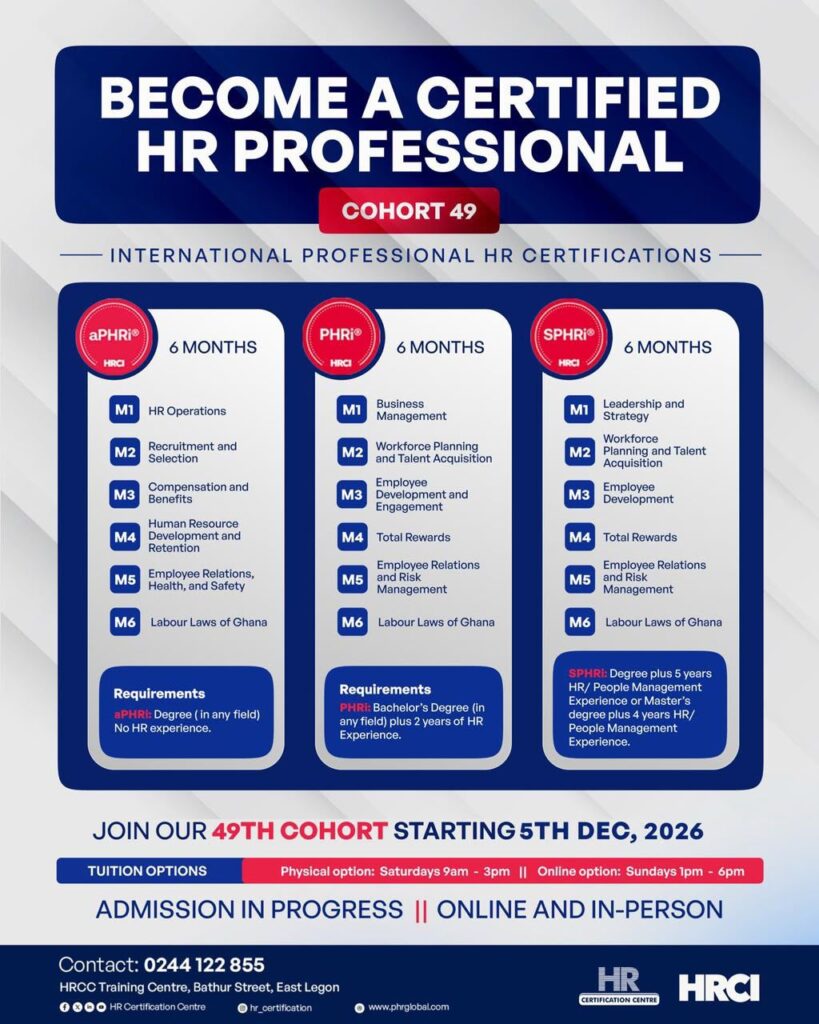
An HRCI credential — whether aPHRi, PHRi, or SPHRi — is valid for three years. After that, you either earn 60 Recertification Credit Hours through approved professional development activities, or you retake the exam. Most certified professionals choose the credit route because you build real skills while you renew.
Three years sounds like plenty of time. It usually isn’t, especially if you’re also managing a full-time role and a life around it. The professionals who handle recertification without drama are the ones who start accumulating credits in year one. Workshops, webinars, HR events, structured learning programmes — these all qualify. The ones who scramble are the ones who treated the exam as a finish line.
Ghana’s context adds something the global averages don’t capture. Under Act 1020, practising HR without professional certification is now unlawful. Letting your credential lapse isn’t just a personal career setback. It’s a professional liability.
The thing that doesn’t show up in salary surveys
After you get certified, you belong to a professional tier with a shared language and shared stakes. Other certified HR professionals understand your work in a way that most colleagues, most managers, and most people outside the function genuinely don’t.
That matters more practically than it might sound. It’s where you find out about roles before they’re posted. It’s where you get a straight answer on whether a salary offer is competitive, how another organisation handled a redundancy process under Ghana’s Labour Act, or which learning provider is actually worth the money. It’s where your name starts coming up in conversations you’re not part of.
HRCI launched its own global community platform, HRCI ENGAGE, in early 2025. But the most useful professional communities are local ones, where the conversations happen in the same job market, under the same labour law, with the same pressures.
What the next three years should look like
The certified professionals who advance fastest after getting credentialed aren’t necessarily the ones who studied hardest for the exam. They tend to be the ones who treated certification as an entry point rather than an endpoint.
That means accumulating recertification credits with some intention — choosing learning that builds toward the role you want, not just the easiest 60 hours you can find. It means staying in the professional conversation, not going quiet after the exam. And it means being clear, to yourself and to whoever is making decisions around you, about what the credential actually signals: verified expertise maintained to an international standard, not a one-time achievement from three years ago.
In Ghana right now, that distinction matters. Act 1020 has changed the baseline. Organisations that didn’t care about certification before are asking different questions. Certified professionals who are also active in their professional community — contributing, staying current, building real relationships with other practitioners — are the ones positioned to benefit most from that shift.
The Association of Certified HRs – Ghana (ACHR) is built for certified HR professionals who want to stay current, stay connected, and keep their career moving after the exam.
To learn more, visit www.phrglobal.com or call 020 800 7585 | 0244 122 855 | 0599 444 999.
Sources: Payscale / TechTarget, HRCI certification career advancement data; SHRM HR compensation research (10–25% salary premium for certified professionals); AIHR, “HRCI Recertification: Everything You Need To Know” (2026 edition); MYCPE ONE, HRCI recertification requirements summary; AIHR, “HRCI Review 2026” (HRCI ENGAGE launch noted); Republic of Ghana, Human Resource Management Professionals Act, 2020 (Act 1020).