Most HR professionals get comfortable running the department. Payroll gets processed, leave gets approved, files get updated. Then a business decision gets made in a room they weren’t invited to, and they realise administration was never going to be enough.
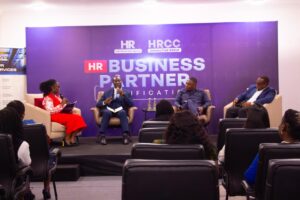
That’s the gap HR Certification Centre set out to close this past weekend, when it officially welcomed Cohort 48 into its six-month International Professional HR Certification Program. The orientation and introductory lecture brought together aspiring HR professionals, practitioners, and leaders for a session that was as much about mindset as it was about logistics.
How the Next Six Months Work
Pearl P. Tehoda opened the session by walking candidates through the roadmap ahead. The programme is built to fit around real work schedules:
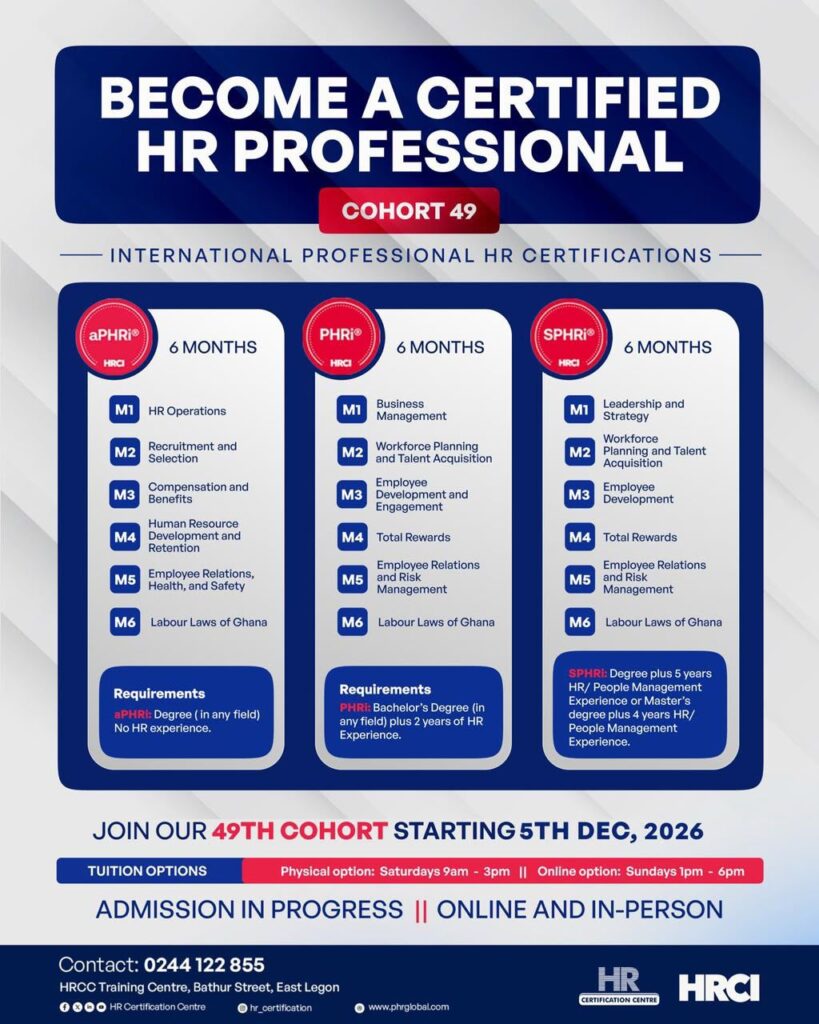
- In-person classes: Saturdays, 9:00 a.m. – 3:00 p.m.
- Virtual classes: Sundays, 1:00 p.m. – 6:00 p.m., with links sent directly to enrolled students.
- Flexible switching: Candidates aren’t locked into one format — they can move between in-person and virtual, backed by digital manuals, training slides, and a bank of over 1,000 practice questions on the LMS.
204 candidates enrolled by opening day, with registration still open for the remaining slots.
Eleven Years of Doing This
HRCC isn’t new to this. Over eleven years, the Centre has trained and certified more than 5,000 HR practitioners, and remains an approved preparatory and recertification provider for the Human Resource Certification Institute (HRCI). Cohort 48 candidates are working toward the aPHRi, PHRi, and SPHRi designations — credentials recognised in 134 countries.
Certification is also the entry point into a wider community: the Association of Certified HRs for ongoing advocacy and networking, the National HR Mentorship Program for early-career professionals with three years or less of experience, and HRCC Consulting Group, which connects that training to real corporate work.
The Lecture: HR Has to Understand the Business, Not Just Run It
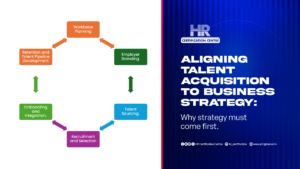
The masterclass, led by Dr. Jeff Bassay, was where the weekend’s real thesis landed: HR stops being a support function the moment it starts thinking like one of the business’s core strategic functions, not after it.
A few ideas candidates left with:
Outside-in, not inside-out. Strategic HR starts outside the HR office — with customer demands, market volatility, and what the business is actually trying to achieve — and works inward from there. An HR strategy that isn’t anchored to the business’s real challenges isn’t a strategy; it’s paperwork.
Build, Buy, or Borrow. Every talent decision is really one of three choices: develop the skill internally, hire it from outside, or bring it in through outsourcing and contracting. Knowing which one fits a given problem is a strategic call, not a recruitment reflex.
Measuring what training actually does. Dr. Bassay walked candidates through evaluating training and development initiatives across four levels — reaction, learning, behaviour, and business results — a reminder that a well-received workshop and a workshop that changes outcomes are two different things.
The legal ground underneath it all. The session also covered Ghanaian labour law essentials: the hierarchy of ILO conventions, what actually defines an employment contract, and how maternity, annual, and sick leave should be administered.
Reading the Health of a Business
One thread that ran through the discussion: financial performance alone doesn’t tell you if an organisation is healthy. Three things do — cash flow and profitability, customer satisfaction, and employee engagement. HR touches all three, whether or not the org chart says so. Workforce decisions move the first, service quality shaped by trained and motivated people, moves the second, and an engaged workforce is what makes the third possible at all. An HR professional who can only speak to headcount and leave balances is missing two-thirds of that picture.
It’s also, ultimately, a people problem before it’s a numbers problem. An organization’s ability to compete comes down to who’s leading it and operating it day to day — which is exactly why recruitment, development, and succession planning aren’t administrative tasks. They’re how a business decides its own future.
What’s Ahead for Cohort 48
Beyond the core curriculum, candidates will work through practical modules in HR Analytics, Artificial Intelligence in HR, Social Security Administration, and Business Finance for HR Professionals — skills built for where the profession is heading, not where it’s been. The six months close with progress pre-tests, mock exams, the international certification exam itself, and induction into the Association of Certified HRs.
Registration for the remaining Cohort 48 slots is still open. Reach the team on WhatsApp at 0244 122 855, or find the full programme details at www.phrglobal.com.